Introduction
Many portable air conditioner owners are surprised to learn that some portable AC units collect water during operation. Depending on humidity levels, drainage systems, and cooling settings, portable AC units may need occasional draining to continue operating efficiently.
In this guide, we’ll explain how portable AC water drainage works, when portable AC units need draining, and how to prevent common water-related problems.
Quick Picks
| Best For | Recommendation |
|---|---|
| Best Low-Maintenance Option | Self-Evaporative Portable AC |
| Best Humid Climate Setup | Continuous Drain Hose |
| Best Prevention Tip | Regular Drain Checks |
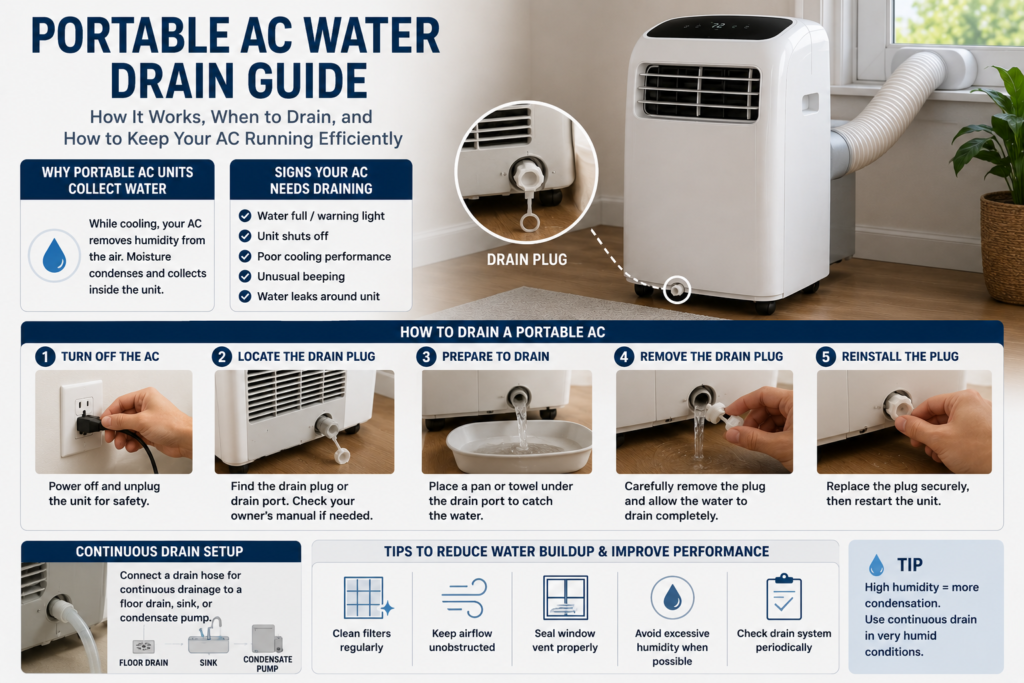
Why Portable AC Units Collect Water
Portable AC units remove humidity from indoor air while cooling a room.
As warm air passes through the system:
- moisture condenses
- water collects internally
- excess humidity is removed from the air
This process helps improve comfort while reducing indoor moisture levels.
Do All Portable AC Units Need Draining?
Not always.
Many modern portable AC units use:
self-evaporative systems
which automatically evaporate and exhaust most moisture through the vent hose.
However, in:
- humid climates
- heavy summer use
- poorly ventilated rooms
portable AC units may still require manual draining.
Signs Your Portable AC Needs Draining
Common signs include:
- the unit shuts off unexpectedly
- water warning lights appear
- cooling performance drops
- unusual beeping sounds occur
- water leaks appear near the unit
Some portable AC systems automatically stop running when internal water tanks become full.
How to Drain a Portable AC
Step 1: Turn Off the Portable AC
Always power off and unplug the unit before draining water.
Step 2: Locate the Drain Plug
Most portable AC units include:
- lower drain ports
- rear drain plugs
- drainage hoses
Check the owner’s manual for your specific model.
Step 3: Place a Drain Pan or Towel
Water may drain quickly once the plug is removed.
Using:
- towels
- shallow pans
- floor protection
can help prevent spills.
Step 4: Remove the Drain Plug
Carefully remove the plug and allow the water to drain completely.
Step 5: Reinstall the Plug
After draining:
- securely replace the plug
- restart the portable AC
- verify normal operation
Continuous Drain Setup
Some portable AC units support:
continuous drainage
using a drain hose connected to:
- floor drains
- sinks
- condensate pumps
Continuous drainage is especially helpful in:
- humid climates
- basements
- extended cooling sessions
Tips to Reduce Portable AC Water Problems
To reduce excess water buildup:
- clean filters regularly
- maintain proper airflow
- seal window vent kits correctly
- avoid excessively humid conditions when possible
- inspect drain systems periodically
These adjustments may improve cooling efficiency while reducing moisture buildup.
Frequently Asked Questions
Why is my portable AC filling with water quickly?
High humidity levels often increase condensation and water collection.
Can portable AC units run without draining?
Many modern systems use self-evaporative technology, but some conditions still require manual drainage.
Is water leaking from a portable AC normal?
Small amounts of condensation may occur, but excessive leaking may indicate drainage issues or poor setup.
Final Thoughts
Understanding portable AC drainage helps improve cooling performance, reduce water problems, and maintain long-term efficiency.
If your portable AC is not cooling properly, check out our guide on why is my portable AC not cooling:
https://coolroomsolutions.com/why-is-my-portable-ac-not-cooling/
For maintenance tips, explore our guide on how to clean a portable AC filter:
https://coolroomsolutions.com/how-to-clean-a-portable-ac-filter/
If you are learning about vent installation, take a look at our guide on how to vent a portable AC correctly:
https://coolroomsolutions.com/how-to-vent-a-portable-ac-correctly/
For more efficient cooling systems, check out our guide on the best energy efficient portable ACs:
https://coolroomsolutions.com/best-energy-efficient-portable-acs/