Introduction
Proper ventilation is one of the most important parts of using a portable air conditioner effectively. Without correct venting, portable AC units may struggle to cool rooms efficiently, consume more electricity, and create unnecessary heat buildup indoors.
In this guide, we’ll explain how to vent a portable AC correctly, common mistakes to avoid, and tips for improving cooling performance.
Quick Picks
| Best For | Recommendation |
|---|---|
| Best Window Vent Kit | Included Sliding Window Kit |
| Best Dual Hose Option | Whynter ARC-14S |
| Best Apartment-Friendly Setup | Portable AC with Adjustable Window Kit |
Why Portable AC Venting Matters
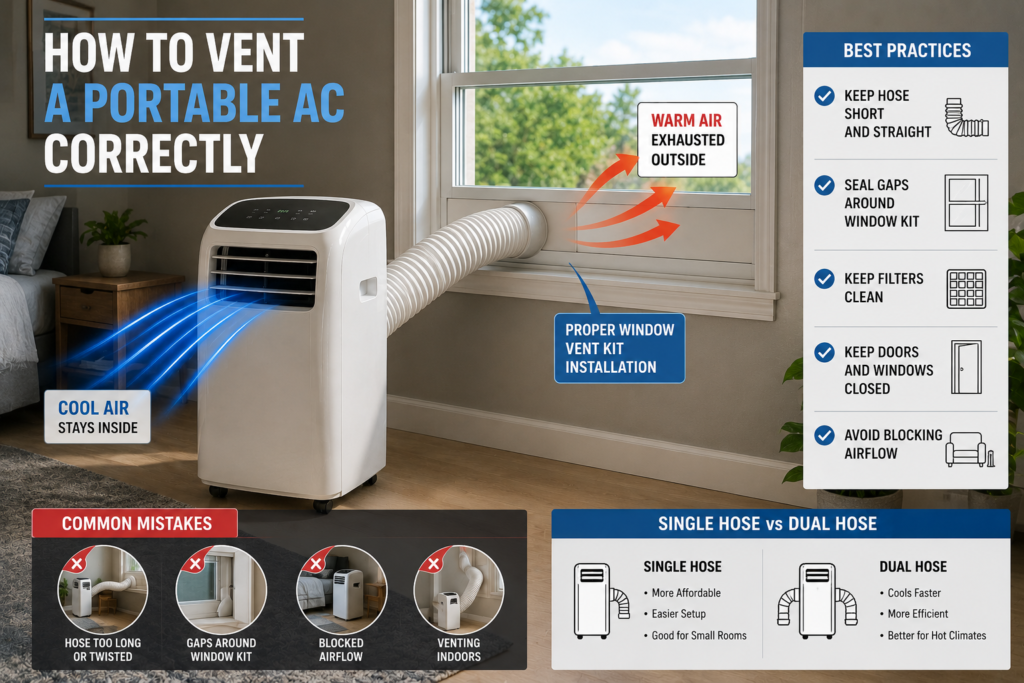
Portable air conditioners remove heat from indoor air and push that heat outside through an exhaust hose.
Without proper venting:
- rooms may stay warm
- cooling efficiency drops
- electricity usage increases
- the AC may run continuously
Correct venting helps portable AC units cool spaces faster and more efficiently.
How Portable AC Venting Works
Portable AC units use an exhaust hose connected to a window vent kit.
The system works by:
- pulling warm air from the room
- cooling the air internally
- exhausting heat outside through the hose
This process allows cooler air to circulate indoors while heat leaves the room.
Best Ways to Vent a Portable AC
Sliding Window Venting
Most portable AC units are designed for sliding windows using adjustable vent kits included with the unit.
This is the most common and efficient setup.
Horizontal Window Venting
Portable AC units can also be vented through standard horizontal windows using adapter kits.
Temporary Apartment Venting
Many apartment renters prefer portable AC units because the vent kits are removable and do not require permanent installation.
Common Portable AC Venting Mistakes
Poor Window Sealing
Gaps around the vent kit allow hot outdoor air to leak back inside.
Long Exhaust Hose Placement
Long or twisted hoses reduce cooling efficiency and airflow.
Blocked Airflow
Furniture or walls placed too close to the portable AC can reduce performance.
Venting Indoors
Portable AC units should never vent heat into another room or indoor space.
Tips for Better Cooling Performance
To improve portable AC performance:
- keep the exhaust hose short and straight
- seal window gaps properly
- clean filters regularly
- avoid direct sunlight when possible
- keep doors closed while cooling
These adjustments may improve cooling efficiency while reducing electricity usage.
Dual Hose vs Single Hose Venting
Single Hose Systems
Single hose portable AC units use one hose to vent heat outdoors.
These systems are usually:
- more affordable
- easier to set up
- common in smaller rooms
Dual Hose Systems
Dual hose systems use:
- one hose for intake air
- one hose for exhaust
Dual hose systems often:
- cool rooms faster
- improve efficiency
- perform better in hotter climates
Frequently Asked Questions
Can you vent a portable AC without a window?
Portable AC units usually require access to an outdoor vent point such as a window, sliding door, or wall vent.
Can portable AC hoses be extended?
Shorter hoses generally perform better. Long hose extensions may reduce cooling efficiency.
Do portable AC vent kits leak hot air?
Poorly sealed kits can allow heat to enter the room, which is why proper installation matters.
Final Thoughts
Proper portable AC venting plays a major role in cooling performance, efficiency, and electricity usage.
If you are concerned about energy usage, explore our guide on do portable ACs use a lot of electricity:
https://coolroomsolutions.com/do-portable-acs-use-a-lot-of-electricity/
For more efficient cooling options, check out our guide on the best energy efficient portable ACs:
https://coolroomsolutions.com/best-energy-efficient-portable-acs/
If you are comparing cooling systems, take a look at our guide on portable AC vs window AC:
https://coolroomsolutions.com/portable-ac-vs-window-ac/
For apartment-friendly cooling setups, explore our guide on the best portable ACs for apartments:
https://coolroomsolutions.com/best-portable-acs-for-apartments/