Introduction
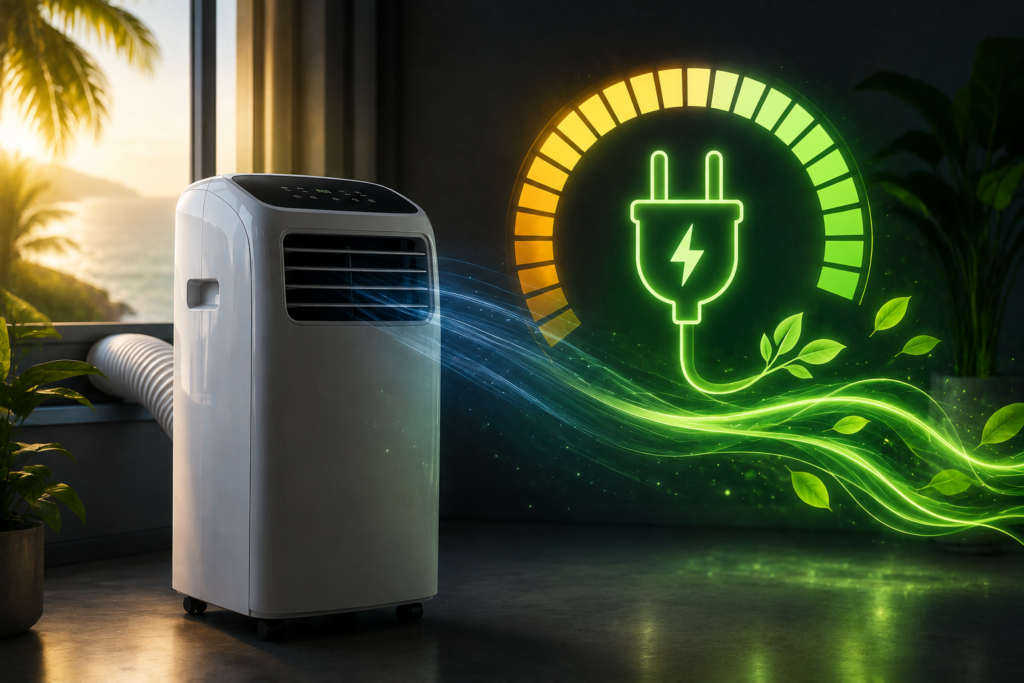
Many people considering a portable air conditioner wonder how much electricity these units actually use. While portable ACs can significantly improve comfort during hot summer weather, energy usage depends on factors like room size, cooling settings, insulation, and the type of unit being used.
In this guide, we’ll explain how much electricity portable ACs use, what affects energy consumption, and how to reduce cooling costs while staying comfortable.
Quick Picks
| Best For | Recommendation |
|---|---|
| Best Energy Efficient Overall | Midea Duo Portable AC |
| Best Dual Hose Efficient Option | Whynter ARC-14S |
| Best Budget Efficient Option | BLACK+DECKER BPACT08WT |
What Affects Portable AC Electricity Usage?
BTU Rating
Higher BTU portable AC units typically consume more electricity because they are designed to cool larger spaces.
Smaller rooms may only require:
- 8,000 BTU units
Larger spaces may require:
- 12,000–14,000 BTU units
Choosing the correct BTU size helps avoid wasted energy.
How Often the AC Runs
Portable AC units consume more electricity when running continuously for long periods, especially during extremely hot weather.
Factors that increase runtime include:
- poor insulation
- direct sunlight
- large rooms
- high outdoor temperatures
Energy Efficiency Features
Modern portable AC units may include:
- eco modes
- programmable timers
- inverter technology
- dual hose systems
These features can help reduce electricity usage over time.
Are Portable ACs Expensive to Run?
Operating costs vary depending on:
- electricity rates
- AC size
- runtime
- climate conditions
In many cases, portable AC units are more affordable than cooling an entire house with central air conditioning, especially when only one room needs cooling.
However, portable AC units are generally less efficient than window AC units.
Tips to Reduce Electricity Usage
Use Eco Mode
Many portable AC units include energy-saving modes that reduce unnecessary cooling cycles.
Close Curtains During Hot Hours
Blocking direct sunlight helps reduce heat buildup inside the room.
Clean Filters Regularly
Dirty filters force portable AC units to work harder, increasing energy usage.
Seal the Window Vent Properly
Preventing hot outdoor air from leaking inside improves cooling efficiency.
Use the Correct Room Size
Using an oversized or undersized unit can reduce cooling efficiency and increase electricity consumption.
Are Energy Efficient Portable ACs Worth It?
Energy efficient portable ACs can help:
- lower monthly electricity costs
- improve cooling performance
- reduce noise levels
- maintain more consistent temperatures
Efficient models may cost more initially but can provide long-term savings over time.
Frequently Asked Questions
Do portable ACs increase electric bills?
Yes, portable AC units do increase electricity usage, but efficient models and proper usage habits can help reduce costs.
Are portable ACs cheaper than central AC?
Portable AC units can be cheaper when cooling a single room instead of an entire home.
Do inverter portable ACs save electricity?
Yes. Inverter systems are generally more energy efficient because they regulate cooling output more smoothly.
Final Thoughts
Portable AC units do use electricity regularly, but modern energy efficient models can help reduce cooling costs while improving comfort during hot weather.
If you are looking for more efficient cooling options, check out our guide on the best energy efficient portable ACs:
https://coolroomsolutions.com/best-energy-efficient-portable-acs/
For affordable cooling solutions, explore our guide on the best portable ACs under $300:
https://coolroomsolutions.com/best-portable-acs-under-300/
If you are comparing cooling systems, take a look at our guide on portable AC vs window AC:
https://coolroomsolutions.com/portable-ac-vs-window-ac/
For apartment-friendly cooling options, check out our guide on the best portable ACs for apartments:
https://coolroomsolutions.com/best-portable-acs-for-apartments/